Printable Morse Code Chart

The complete International Morse code on one sheet: every letter, every digit, and the common punctuation marks. Print this page directly (the print version drops everything except the chart) or grab a download for offline use, classrooms, or the fridge door.
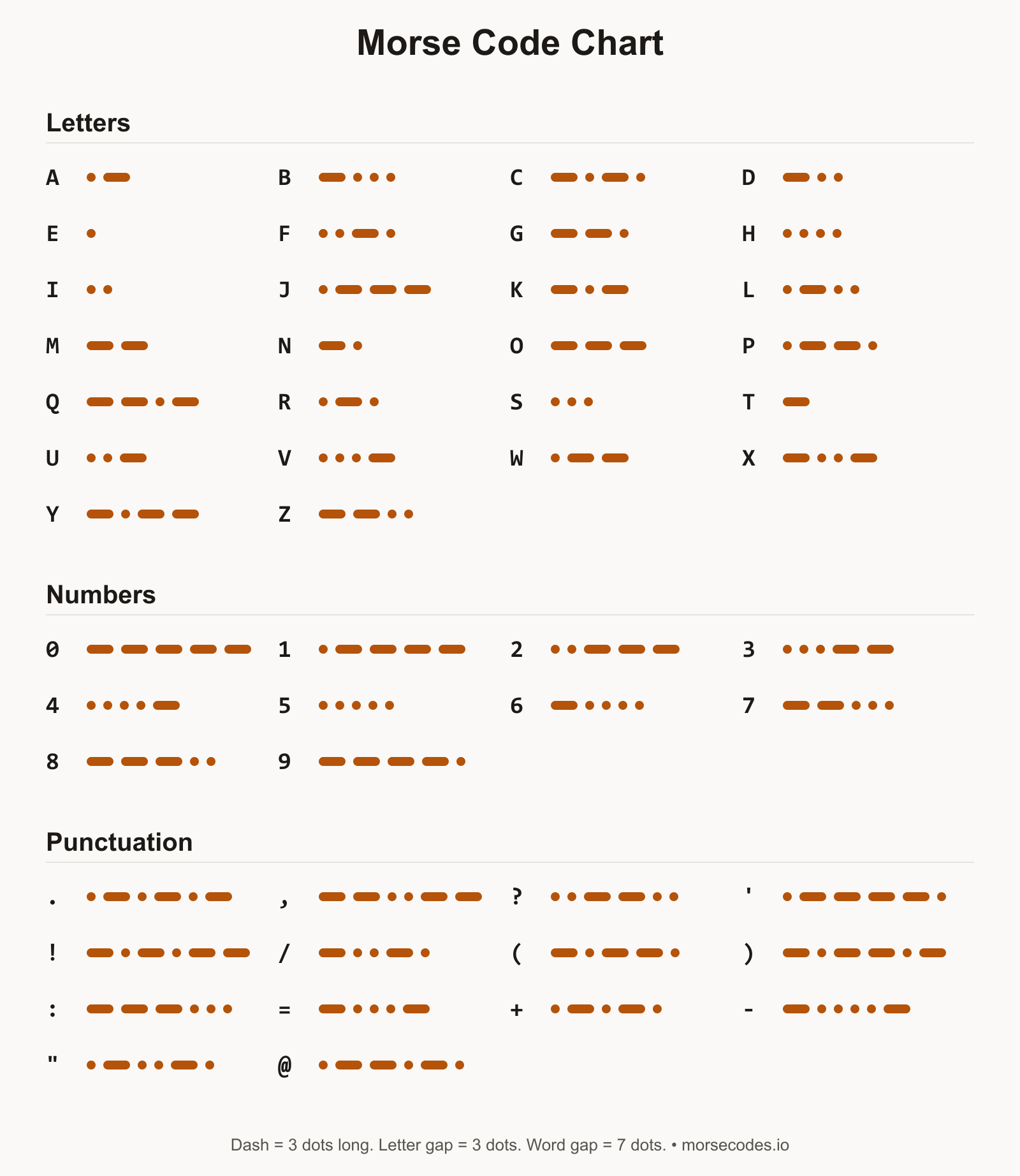
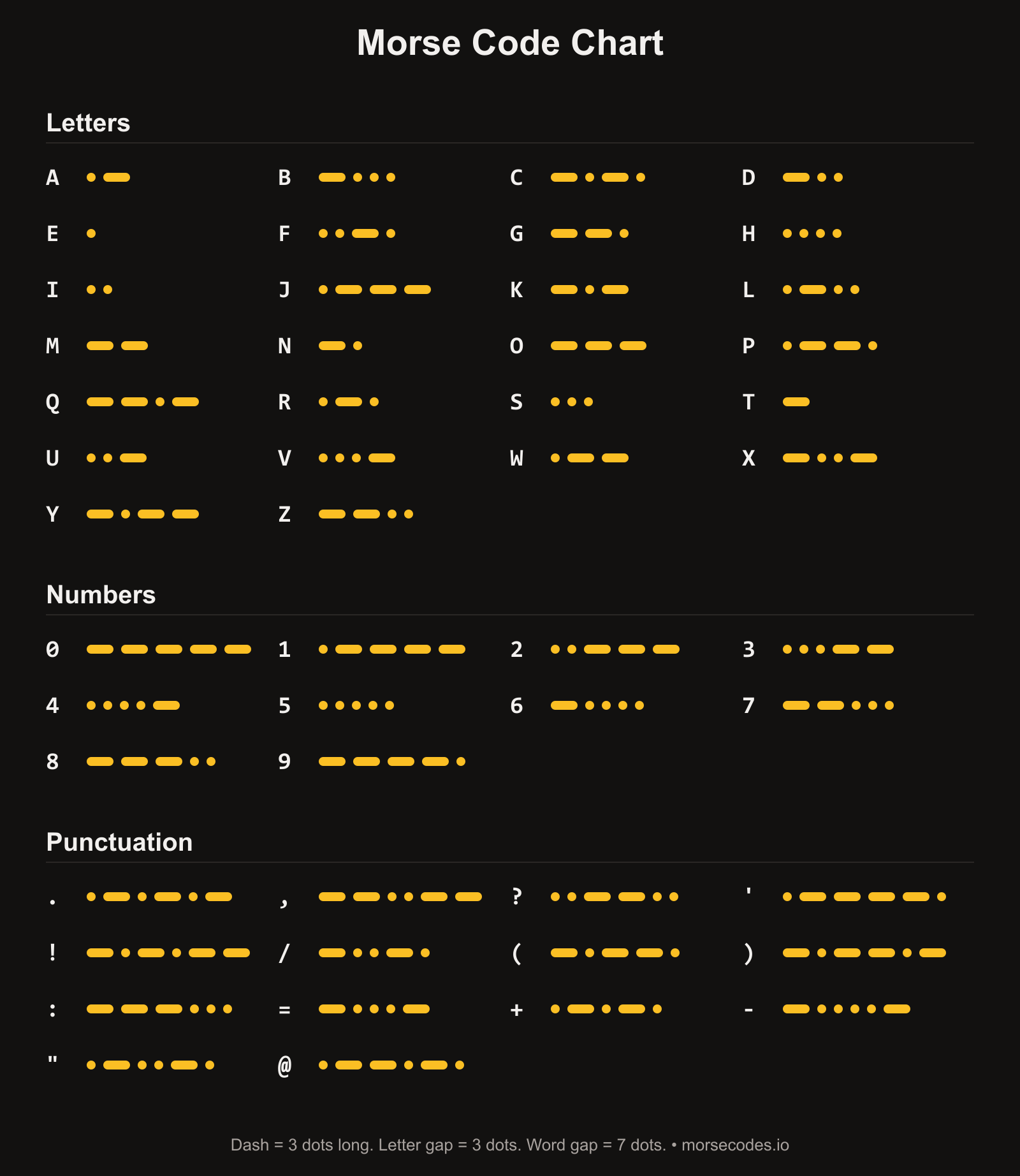
Morse Code Chart – morsecodes.io
Letters
- A·−
- B−···
- C−·−·
- D−··
- E·
- F··−·
- G−−·
- H····
- I··
- J·−−−
- K−·−
- L·−··
- M−−
- N−·
- O−−−
- P·−−·
- Q−−·−
- R·−·
- S···
- T−
- U··−
- V···−
- W·−−
- X−··−
- Y−·−−
- Z−−··
Numbers
- 0−−−−−
- 1·−−−−
- 2··−−−
- 3···−−
- 4····−
- 5·····
- 6−····
- 7−−···
- 8−−−··
- 9−−−−·
Punctuation
- .·−·−·−
- ,−−··−−
- ?··−−··
- '·−−−−·
- !−·−·−−
- /−··−·
- (−·−−·
- )−·−−·−
- :−−−···
- =−···−
- +·−·−·
- -−····−
- "·−··−·
- @·−−·−·
Dash = 3 dots long · Gap between letters = 3 dots · Gap between words = 7 dots
How to use the chart
To encode, find each letter and copy its dots and dashes, leaving a space between letters and a slash between words. To decode, work in the other direction, one group at a time. Timing is what makes it morse rather than noise: a dash lasts three times as long as a dot, letters are separated by a three-dot silence, and words by a seven-dot silence.
If you'd rather hear the codes than read them, the alphabet page plays every letter aloud, the numbers page explains the five-element digit rule, and the punctuation page covers the symbols and prosigns in detail. For anything longer than a letter, the translator converts whole messages with sound and light. To read a message someone sent you, paste it into the Morse code decoder.